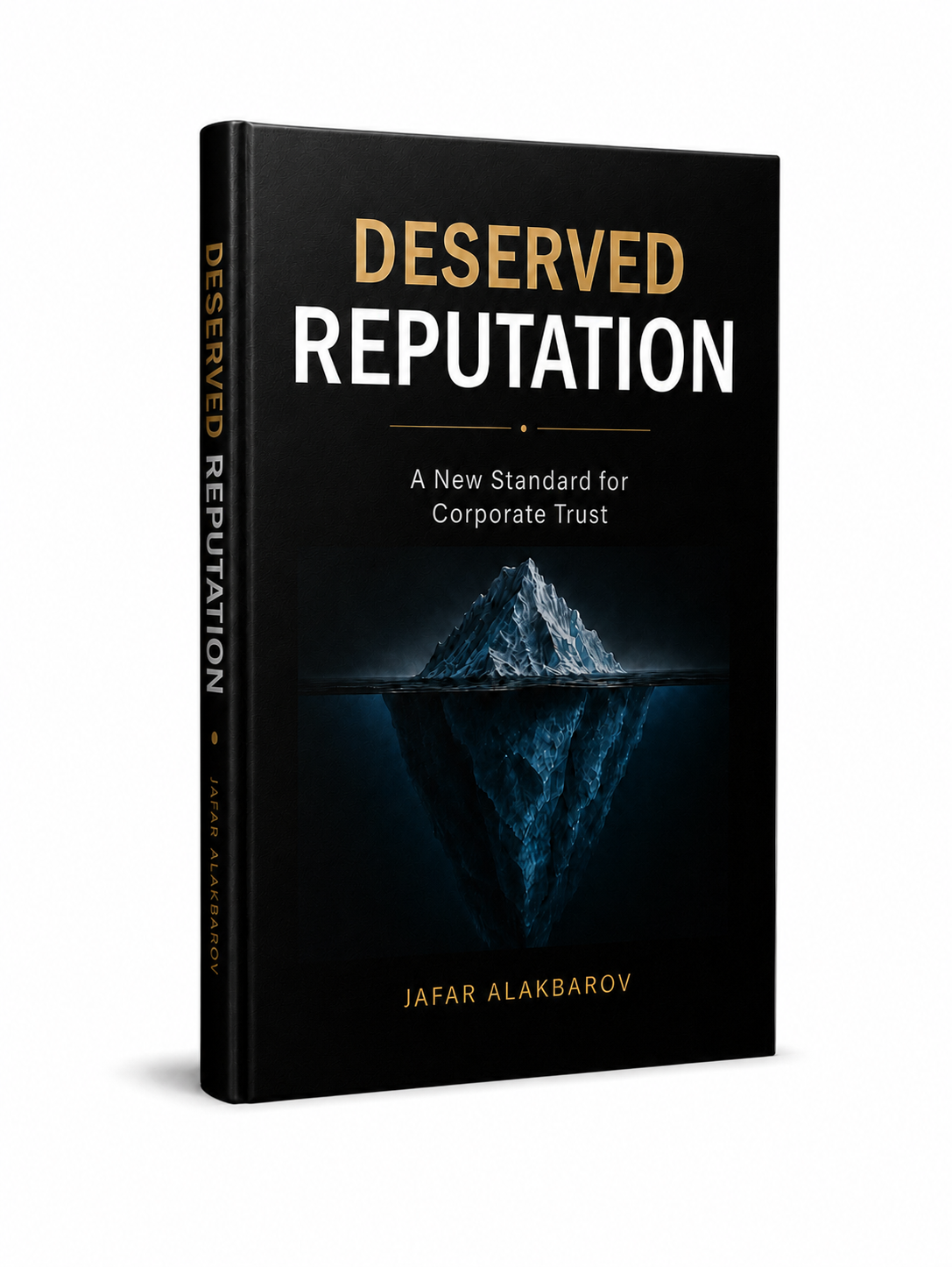
Would your company survive full transparency?
Deserved Reputation: A New Standard for Corporate Trust asks whether trust would survive if stakeholders could see the full costs, tradeoffs, and consequences behind organizational success. The book introduces a new category in business thinking: deserved reputation, i.e., the trust an organization can withstand under pressure.
It translates an abstract idea into a structured, evidence-based assessment across key domains of corporate behavior—Leadership Accountability, Governance Resilience, Products Integrity, Financial Risk Transparency, Societal & Environmental Cost, People Sustainability—enabling leaders to evaluate whether their reputation is grounded in reality or supported by narrative alone.
In addition, the book shows how trust is shaped by where costs are absorbed or externalized, how accountability is distributed before and after failure, and how transparency signals either resilience or hidden exposure. These lenses provide a new way to interpret familiar data—linking governance, operations, and leadership decisions directly to trust outcomes.
The result is not simply a new framework, but a shift in perspective: from managing reputation as perception to managing it as a reflection of how the organization is built and how it behaves under constraint. In doing so, Deserved Reputation offers a practical foundation for leaders seeking to align what their organizations promise with what they can reliably deliver.
THE COST OF TRUST
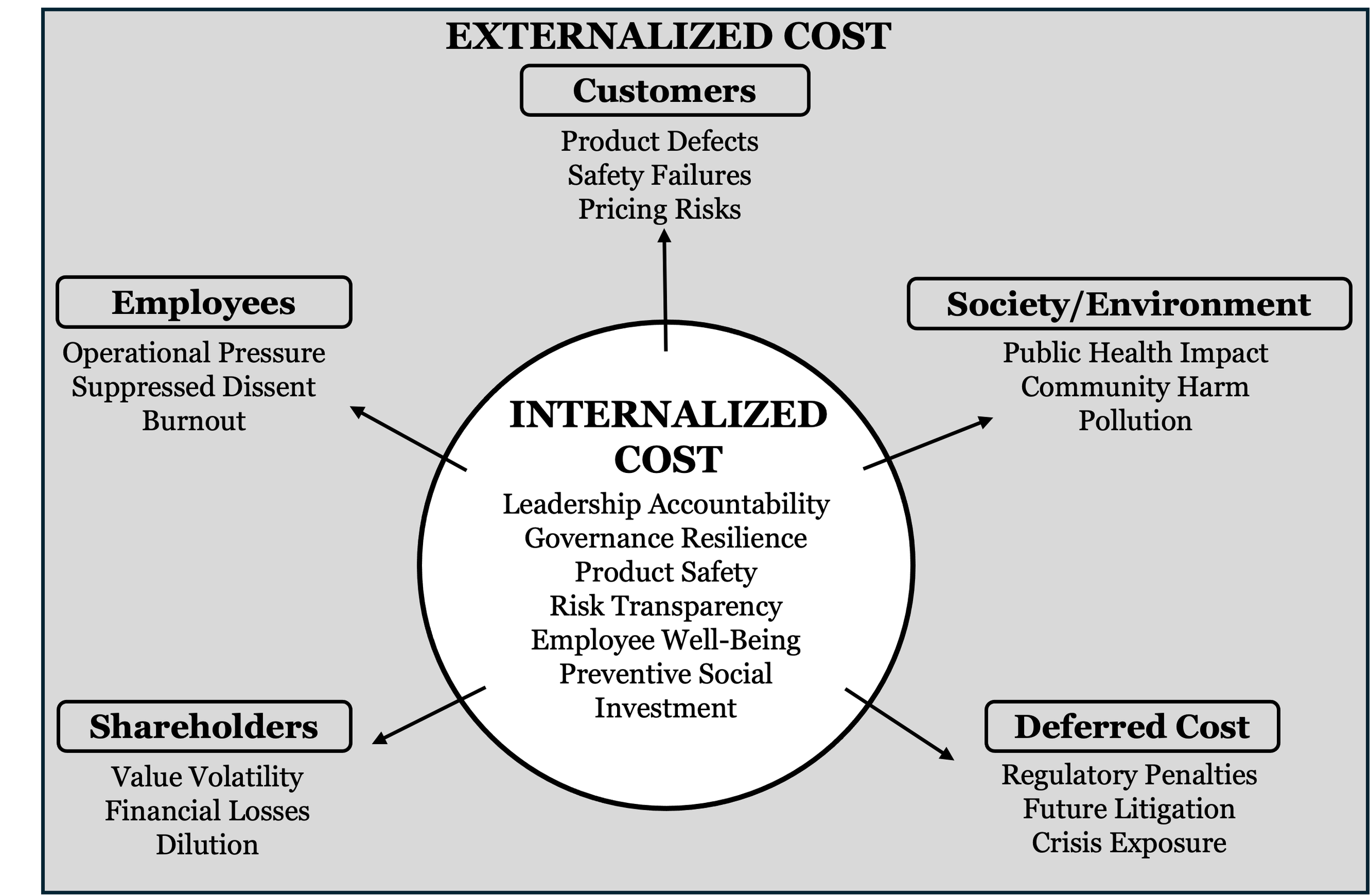
A central idea in Deserved Reputation is the cost absorption boundary: the line between the costs an organization takes responsibility for and the costs it pushes on others. When organizations internalize the costs of their own decisions, trust becomes more durable. When they externalize these costs, reputation becomes increasingly fragile.
The book examines this boundary across five cost pathways:
4. SHAREHOLDER COST
When success depends on fragile assumptions, hidden liabilities, or short-term value extraction, shareholders will eventually absorb the cost through volatility, financial losses, or dilution.
5. DEFERRED COST
Some organizational costs are not absorbed immediately. They are delayed. Regulatory penalties, future litigation, operational breakdowns, and crisis risk often represent costs that were created earlier but allowed to return later.
1. CUSTOMER COST
When product defects, safety failures, pricing risks, or service breakdowns are pushed onto customers, trust can appear stable until the customer experience exposes the gap.
2. EMPLOYEE COST
When performance depends on operational pressure, burnout, fear, or suppressed dissent, strong reputation may be supported by a workforce absorbing costs that have not been acknowledged.
3. SOCIAL & ENVIRONMENTAL COST
When growth leads to community harm, public health risks, pollution or other forms of social burden, external stakeholders pay the price of the organization’s success.