A New Standard for Corporate Trust
Reputation is often treated as a perception problem — something to measure, manage, message, or defend. But trust does not become durable because stakeholders think well of an organization. It becomes durable when behavior, decisions, governance, and cost ownership justify that trust over time.
Deserved Reputation looks beyond visibility and sentiment to examine whether an organization’s internal architecture can sustain trust when scrutiny increases, tradeoffs become visible, or performance comes under pressure.
THE PROBLEM
Why Do Good Organizations Lose Stakeholder Trust?
Organizations do not lose trust because they make difficult tradeoffs. Every leader must balance speed and quality, growth and capacity, efficiency and resilience, margin and fairness.
Trust breaks down when the costs of those tradeoffs are hidden, displaced, or pushed onto others — employees, customers, communities, shareholders, or the future.
That is how reputation becomes inflated: not through bad messaging, but through a widening gap between external confidence and internal responsibility.
Growth vs. People Sustainability
Growth can depend on human strain that remains invisible until turnover, burnout, or disengagement rises.
Every Strategic Tradeoff Creates Cost

vs.


vs.


vs.

Innovation vs. Governance
Innovation can outpace oversight when new risks move faster than rules, controls, or accountability.
Efficiency vs. Resilience
Efficiency gains can reduce redundancy, flexibility, or safeguards that protect the organization under stress.
Profitability vs. Social Impact
Margin improvement can shift costs to communities, suppliers, customers, or the environment.

vs.

THE FRAMEWORK
How Deserved Reputation Works
Deserved Reputation is a framework for understanding how an organization’s decisions create hidden costs, where those costs move, who absorbs them, and how they eventually return.
By tracing these cost paths, the framework reveals whether trust is supported by the organization’s behavior — or whether its reputation is living on borrowed time.
Trust is the Outcome of Cost Ownership
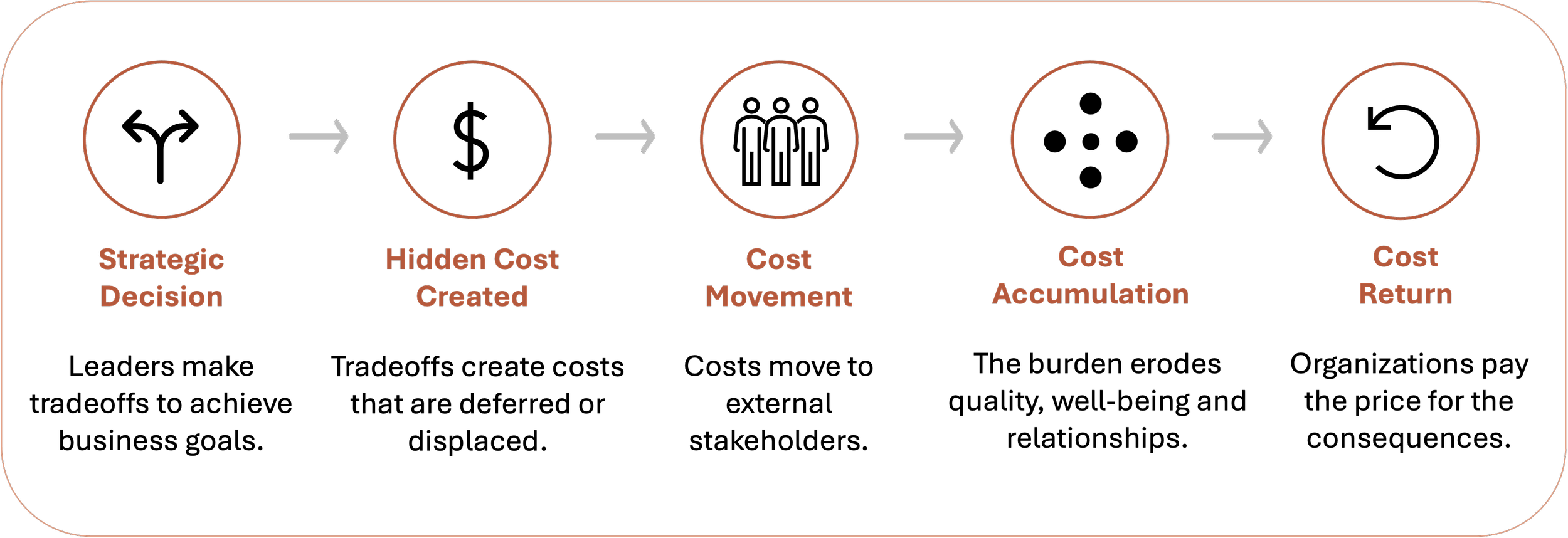
Does your organization's success depend on costs that have not yet returned?
Strategic choices can create value now while shifting part of the burden into the future. Over time, those hidden costs may compound into operational, financial, regulatory, or reputational consequences.
Deserved Reputation helps reveal the full picture behind organizational success: the value created, the costs displaced, the stakeholders affected, and the risks that may eventually return.
By making these tradeoffs visible earlier, organizations can strengthen trust, improve outcomes, and build reputations that endure under pressure.
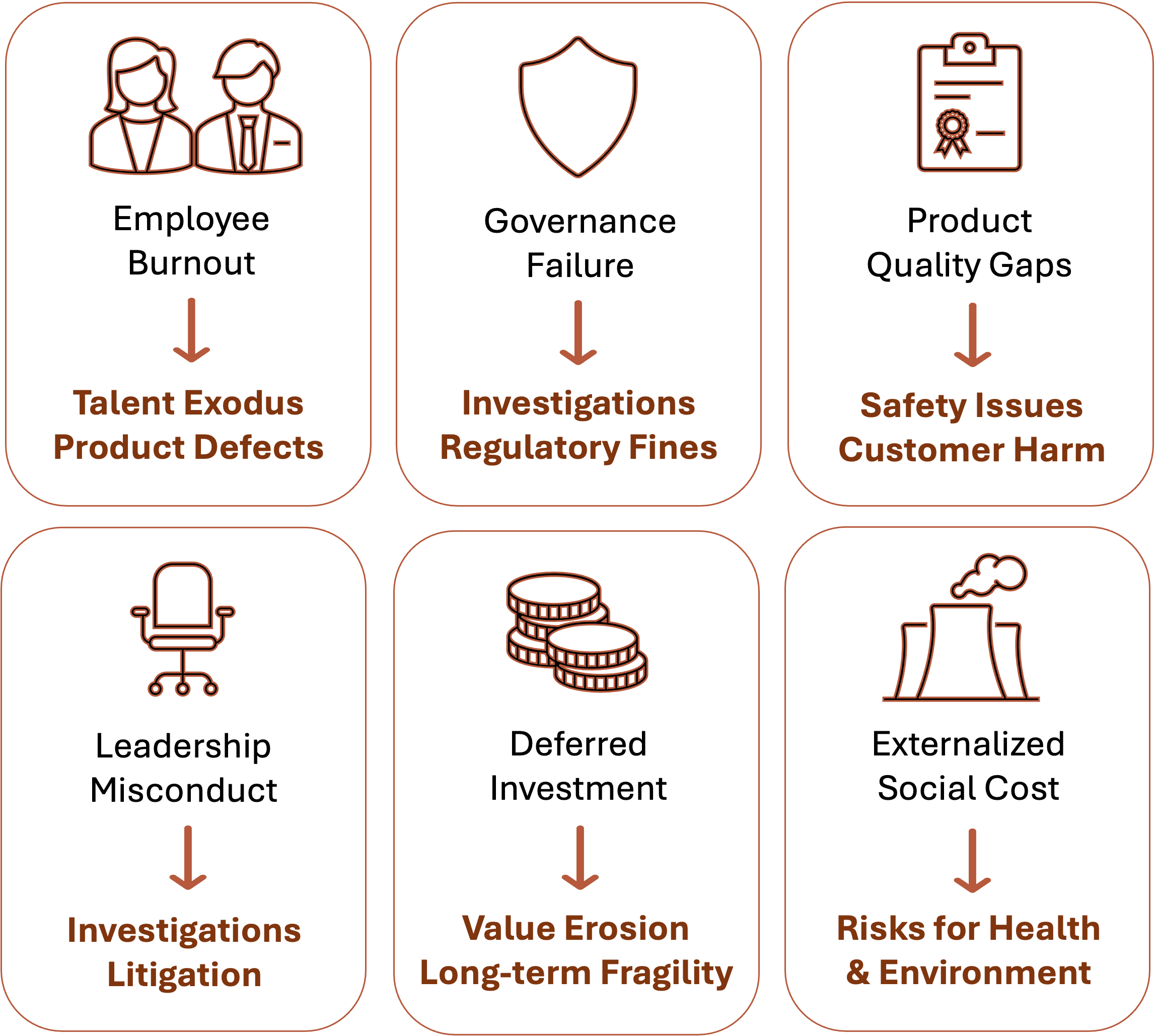
Unaddressed Costs Compound and Return
Ready to See Where Trust Is Structurally Supported — and Where It Is Exposed?
Use the interactive tools to assess reputation strength, identify hidden cost paths, and understand where trust may become vulnerable under pressure.

Assess whether earned reputation is supported by internal architecture.

Map how the costs of a strategic tradeoff return through stakeholders.

Identify whether current trust is financed by hidden, deferred or displaced costs.

Find out which reputation domains are strongest and which are vulnerable.