WHO PAYS FOR
CORPORATE STRATEGY?
A study of strategic costs across the 100 largest U.S. companies
THREE FINDINGS FROM THE STUDY
77%
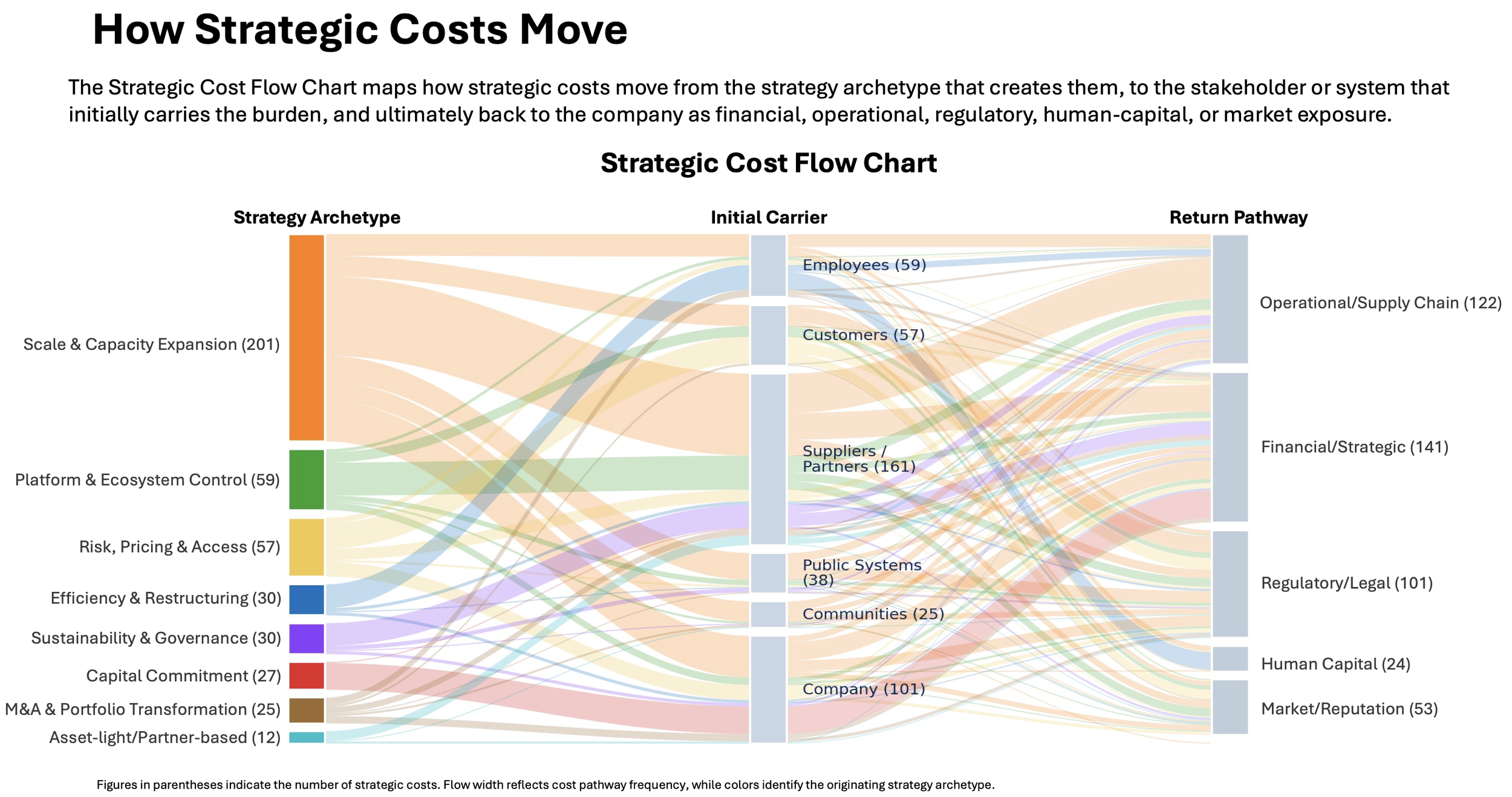
of strategic burdens begin outside the company
Most current and emerging strategic costs identified in the study are initially carried by suppliers, partners, employees, customers, utilities, or communities rather than by the company itself.
Cost transfer does not result in cost elimination.
STRATEGY HAS TWO BALANCE SHEETS
635
Cost Candidates
70
Validated Costs
371
Emerging Costs
46%
of costs come from scale and capacity expansion
Growth increasingly depends on infrastructure companies do not control—from power grids and manufacturing capacity to suppliers and permitting systems.
The constraint on growth may exist outside the enterprise.
The value the company creates.
Revenue
Margin
Market share
Capital returns
100
Largest U.S. Companies
Control
creates value by reducing optionality for others
Platform and ecosystem strategies can increase retention, integration, and recurring revenue while reducing stakeholder choice, portability, negotiating leverage, and freedom to exit.
The same mechanism that creates value can also create resistance.
The costs required to produce value.
Workforce adjustment
Supplier investment
Infrastructure upgrades
Capital Rigidity